
Current and historical litigation data
Litigation trends, judicial tendencies, attorney success, case outcomes, loss events and case durations, all from the world’s largest litigation database.
Know the litigation history of an applicant
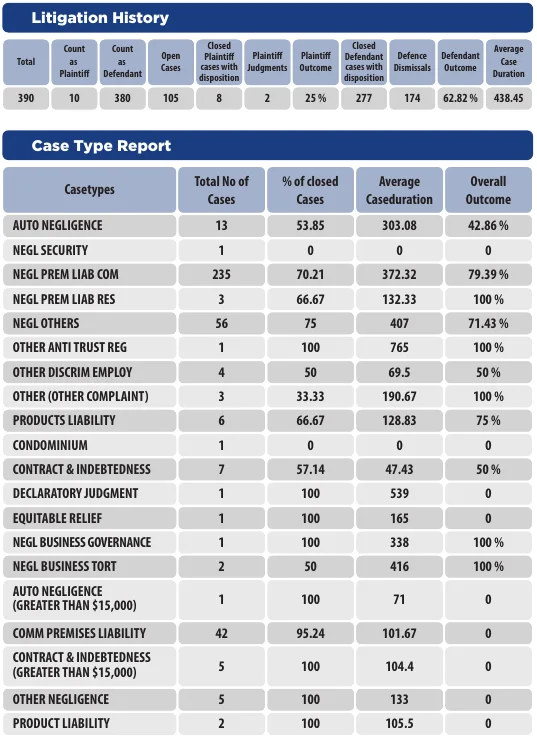
- Volume and type of litigation
- How long their cases last
- Identify trending claims and emerging risk
Litigation changes constantly. Do your risk models?
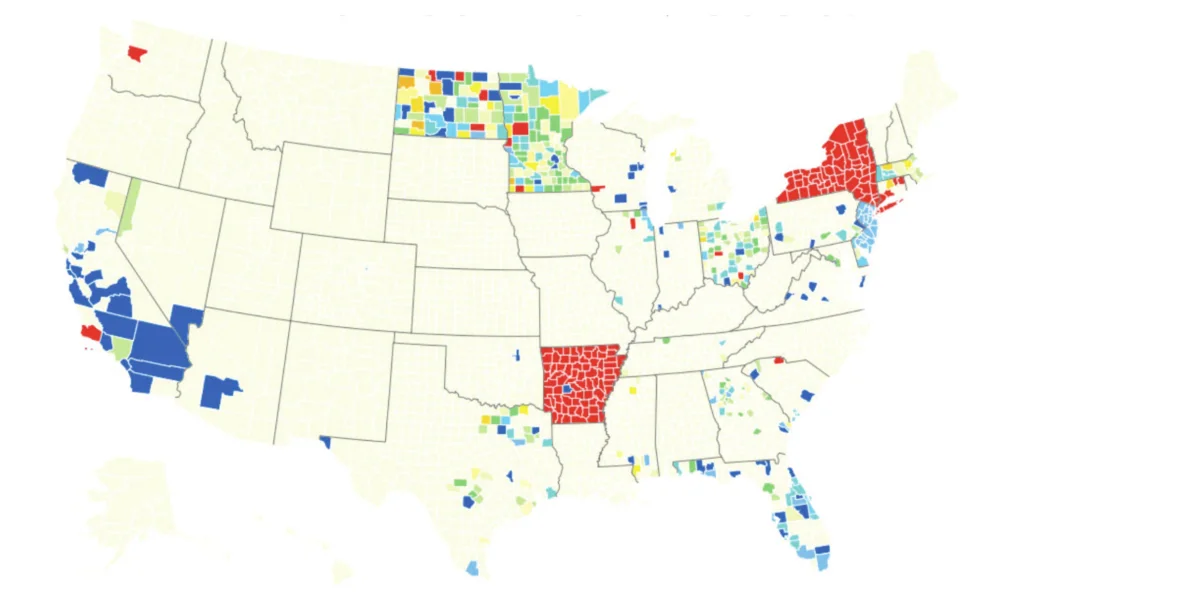
- Litigation trends and judicial tendencies
- Attorney success and case outcomes
- Loss events and case durations
Underwrite with the full litigation picture
LPL underwriting
- Know your applicant’s personal “win rate”
- Know whether an applicant goes beyond their field of expertise
- Go beyond reported “loss history”
D&O underwriting
- Know your applicant’s current and historical litigation
- Know the litigation involving your applicant’s core D&Os (including credit and divorce)
- Go beyond SEC filings
Using Premonition to be a better general liability underwriter
by Ty R. Sagalow, Chief Insurance Officer and Insurance Senior Advisor, Premonition
General liability (GL) losses continue to rise, challenging businesses across a variety of industries. According to a 2017 study by Conning Insurance the combined ratio for U.S. carriers writing GL has been over 100% in recent years, reaching almost 108% in 2017. While recently (4Q 2018) the Insurance Journal was able to report that general liability underwriters were able to increase their premium by a relatively modest 2.54%, rate increases alone are insufficient to most effectively manage the increase in overall claims costs.
To properly underwrite a GL risk, it is vital to underwrite not just the line of business the applicant is in and perhaps its financial condition but to understand the company applicant itself and its management. It is no wonder then that the most experienced GL underwriters will tell you that understanding the people that run a business, especially a small business, is as important as understanding the business itself.
However, up until very recently, there was not an effective way in which the small business GL underwriter could access hard data about an applicant’s litigation profile (Are they involved in any open litigation? How often do they sue or are sued? What types of litigation predominate or are recurring?). This is especially true given that almost all small business enterprises are not publicly traded and therefore do not file SEC reports that might contain some of this information.
Premonition has been called the “Moneyball” method of insurance underwriting and one can see why. With Premonition, small company GL underwriters can, for the first time, make data based decisions on the extent of the applicant’s, or its key management, total litigation history.
Recently, however, a data and analytics company, Premonition, has emerged as the “go to” company for small company GL underwriters. Premonition has the largest civil litigation database in the United States holding information on approximately 87% of all state cases plus, via PACER, 100% of all federal cases. The database not only contains information on the name of the parties, their attorneys, the judge, case type and length of case but the outcome as recorded by the court.
While all of this information can be helpful to the small company GL underwriter, what is especially important is the number of cases brought against, and brought by, the company applicant. Indeed, even knowing that the small business applicant CEO is in the midst of a bitter divorce or is being personally sued by his creditors might be of some interest. Furthermore, since the small company GL underwriter largely expects that there is no litigation of any kind against the company applicant, the discovery of any litigation likely increases the risk to the insurer.
When the underwriter receives an application for insurance, the underwriter will either run the name of the company and its key management through the Premonition database (any underwriting platform can be easily connected to the Premonition database), or if the system is set up for automatic reports, simply wait for the system to run the company applicant data. The underwriter will then be told whether there has been or is now pending any litigation of any nature against or brought by the company applicant or the management queried. If there is litigation, the underwriter can see if it is open or closed, when it was originally filed and, if closed, what was the result. Armed with this data, the underwriter can decide whether to ask more questions of the applicant, increase the rate or modify the terms or conditions of the policy. In extreme cases, the underwriter could refuse to offer coverage.
Add the world’s largest litigation database straight into your system using our API. Turn it on.
Ready to Get Started?
Contact us to learn more about our court data offerings.